This page has been written and reviewed by Attorney Eric M. Staggs, a partner at Johnson, Johnson, Whittle, Lancer & Staggs and an attorney admitted to the South Carolina Bar in 2013. Eric represents individuals throughout Aiken, SC, facing drug manufacturing charges, including allegations involving methamphetamine, cocaine base, and other controlled substances.
A drug investigation can quickly become more serious when law enforcement believes ordinary items, property access, or alleged involvement point to production activity. When prosecutors claim the case involves preparing, processing, cultivating, or compounding illegal drugs, an Aiken drug manufacturing lawyer can help clarify what conduct is actually being alleged. These cases often depend on the difference between suspicion, possession, and proof of manufacturing.
Drug manufacturing allegations are among the more serious drug crimes because they may involve several different forms of alleged participation. Prosecutors may claim that a person directly manufactured a substance, attempted to do so, assisted another person, or knowingly participated in conduct connected to production. From a criminal defense perspective, the specific role being alleged can affect how the case is evaluated.
As the investigation develops, law enforcement may rely on lab reports, seized materials, witness statements, digital records, property access information, and forensic findings. Each source may raise different questions about intent, involvement, and reliability. The way those materials connect to the accused person often becomes a central issue.
Felony drug manufacturing charges in Aiken County are generally handled through the Aiken County General Sessions Court. Court proceedings may involve disputes over forensic testing, search procedures, alleged participation, and the interpretation of physical evidence. These issues can shape the direction of the defense.
Johnson, Johnson, Whittle, Lancer & Staggs represents individuals facing drug manufacturing allegations throughout Aiken and Aiken County. Our team reviews the alleged production evidence, investigative records, legal issues, and facts surrounding each charge. We help clients understand the proceedings and prepare for each stage of the defense process.
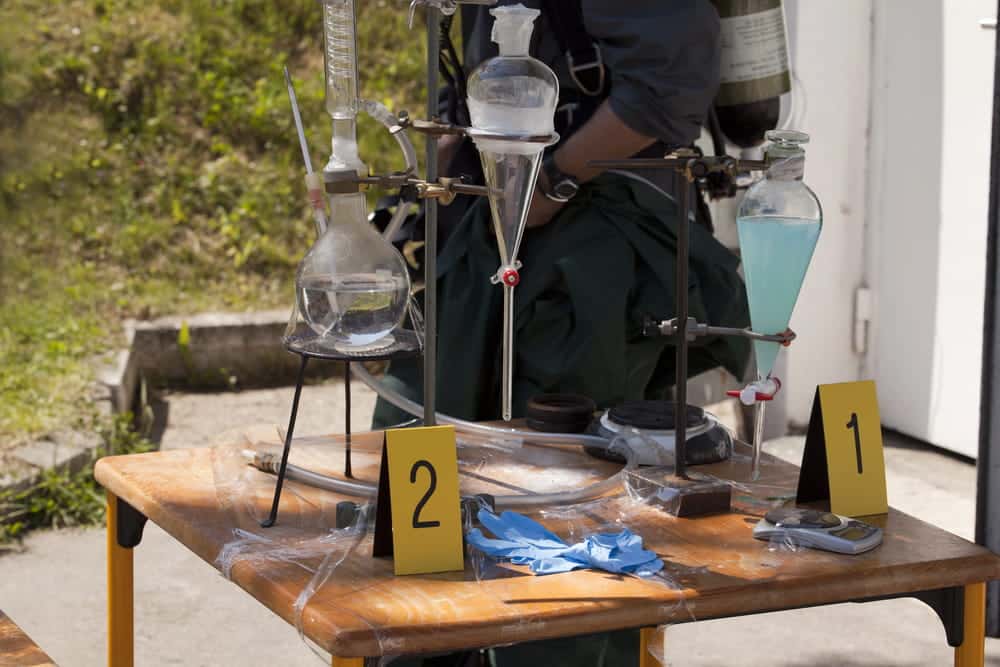
Serious Manufacturing Accusations in Aiken
More Than Being Near Drugs or Equipment
Drug manufacturing allegations involve different legal issues than allegations based only on possession of controlled substances. Prosecutors must prove more than the presence of drugs near the accused person. The focus shifts to whether someone engaged in conduct related to alleged manufacturing activity.
Manufacturing allegations may involve claims that someone prepared, processed, compounded, cultivated, attempted to manufacture, or participated in controlled substance activity. Those allegations concern specific actions rather than simple possession alone. Each claim must be supported by facts that relate directly to the accused person’s alleged conduct.
Finding controlled substances at a property does not automatically prove that every occupant participated in manufacturing activity. The same principle applies when several people have access to the same location. Prosecutors must still establish a connection between the accused person and the alleged conduct.
Because manufacturing allegations involve additional legal elements, they require careful review from the outset. The focus is not simply on the existence of suspected drug activity, but on whether the available facts support each element of the specific charge. That determination depends on the circumstances of the individual case rather than broad assumptions.
Claims That Tie You to Alleged Production
South Carolina law addresses manufacturing-related offenses under S.C. Code § 44-53-370. The statute covers manufacturing, attempting, conspiring, aiding, and possessing with intent to manufacture controlled substances. Even after charges are filed, prosecutors must prove that the accused person participated in the alleged conduct. The filing of a charge does not satisfy that burden by itself.
To establish that connection, prosecutors generally must present evidence addressing:
- Knowledge of the alleged manufacturing activity
- Control over the location or materials involved
- Participation in the alleged conduct
- Personal responsibility for the criminal activity
Each issue must be supported by the available evidence and the applicable law. Because that burden requires proof tied to a specific individual, shared property or common living arrangements often become central issues in manufacturing cases. The prosecution cannot rely on speculation or assumptions simply because several people had access to the same location.
Several people may have access to the same location for entirely different reasons. Association with another individual does not automatically establish participation in manufacturing activity.
For that reason, every allegation deserves an individual review based on the specific facts presented. The legal analysis focuses on the accused person’s conduct instead of the actions of others. Careful evaluation helps determine whether every required legal element can be established. That review often becomes an important part of preparing the case for the next stage.
Evidence That May Not Tell the Whole Story
Shared Spaces, Seized Materials, and Control Issues
Prosecutors often rely on physical evidence when pursuing drug manufacturing allegations. That evidence may include alleged materials, residue, containers, tools, property access records, photographs, or location-based evidence. The presence of those items alone does not answer every legal question.
The central issue remains whether the evidence links a specific individual to the alleged manufacturing conduct. That question often becomes more complicated when investigators recover evidence from a shared home, vehicle, or storage area.
Homes, borrowed vehicles, storage units, and other multi-person properties often create questions about responsibility. Several individuals may have access to the same area without sharing the same level of involvement. For that reason, investigators and prosecutors often examine issues such as ownership, access, and control when evaluating the significance of physical evidence.
A person may own a property without controlling every area inside it. Likewise, someone may have access to a location without exercising authority over its contents. Each circumstance requires careful review before conclusions are reached.
For that reason, prosecutors must show more than the existence of physical evidence at a particular location. They must connect the accused person to the alleged manufacturing activity through the available proof. Every fact should be considered within the full context of the investigation. That process helps determine whether the evidence supports the specific allegations.
Testing Problems That Raise Doubts
Forensic evidence may also play an important role in drug manufacturing cases. Laboratory testing, chemical analysis, chain of custody records, fingerprints, DNA, and digital records may all become part of the case. Each type of evidence must be connected to the allegations through reliable documentation. The strength of the prosecution’s case often depends on that connection.
The reliability of forensic evidence depends on:
- Proper collection
- Accurate labeling
- Appropriate testing
- Secure storage
- Complete documentation
Each step should follow established procedures before the evidence reaches the courtroom. Accurate records also help demonstrate how the evidence was handled throughout the investigation.
Documentation errors, testing concerns, or evidence-handling issues may affect the overall strength of the State’s case. Those issues do not automatically determine the outcome of a criminal proceeding. Instead, they become part of the overall review of the available proof. The court ultimately considers the reliability and relevance of the evidence presented.
For that reason, forensic evidence must support the specific allegations rather than stand alone. The prosecution must still connect the testing results to the accused person’s alleged conduct. The prosecution must show how the forensic evidence fits within the broader factual record supporting the charge.

Felony Exposure in Drug Manufacturing Cases
Penalties Driven by the Substance and Prior Record
Drug manufacturing allegations do not all carry the same penalties under South Carolina law. The potential penalties may depend on factors such as:
- The controlled substance involved
- The applicable drug schedule
- The quantity alleged
- The accused person’s prior criminal record
- The specific charging theory
Because these factors vary from case to case, one manufacturing allegation may carry different legal consequences than another.
Whether a charge is prosecuted as a felony and the potential sentencing range often depend on the controlled substance involved, the applicable statute, and the specific facts of the case. The court considers the specific charge instead of applying the same penalty to every manufacturing case.
In some situations, prosecutors may also file quantity-based allegations under separate statutes. Those allegations can create trafficking-level exposure when the statutory requirements are met. Even so, manufacturing and trafficking remain separate legal accusations with different elements.
A conviction may also create consequences beyond the sentence imposed by the court. Depending on the offense, those consequences can affect employment opportunities, professional licensing, housing, and other important areas of life. The impact often depends on the statute supporting the conviction and the person’s individual circumstances.
Meth and Cocaine Base Charges in South Carolina
S.C. Code § 44-53-375(B) applies specifically to manufacturing and related allegations involving methamphetamine or cocaine base. These penalties do not apply to every manufacturing allegation under South Carolina law. Instead, they apply only when the charged substance falls within that statute.
The statutory penalties are:
- First offense: Up to 15 years in prison, a fine of up to $25,000, or both
- Second offense: 5 to 30 years in prison, a fine of up to $50,000, or both
- Third or subsequent offense: 10 to 30 years in prison, a fine of up to $50,000, or both
The applicable charge determines whether these sentencing provisions govern the case.
Certain convictions may also create collateral consequences that continue after the criminal case ends. Depending on the offense, those consequences may affect employment, housing, professional licensing, and firearm rights following qualifying convictions. Property allegedly connected to drug activity may also be subject to forfeiture proceedings under applicable law.
Weaknesses in the State’s Manufacturing Case
Searches That Put Key Evidence in Question
Drug manufacturing cases often begin with evidence gathered during searches of homes, vehicles, storage areas, mobile phones, or shared property. Because that evidence frequently supports the allegations, the legality of the search can become an important issue. Courts expect law enforcement officers to follow constitutional and statutory requirements when collecting evidence.
Legal questions may arise about search warrants, probable cause, consent, or the scope of a search, and each issue depends on the specific facts of the investigation. Officers must remain within the legal authority granted during the search. If questions arise about whether those limits were exceeded, the court may examine how the evidence was obtained and whether it should remain admissible.
In some cases, attorneys file suppression motions when both the facts and the law support challenging unlawfully obtained evidence. A suppression motion asks the court to determine whether certain evidence should be excluded from the case. The availability of that request depends on the circumstances of the investigation.
Because manufacturing allegations often rely on evidence recovered during a search, those legal questions may affect the strength of the state’s case. Every situation requires an individual review of the surrounding facts. The court considers both the applicable law and the circumstances of the investigation.
Missing Links Between You and the Alleged Activity
Prosecutors must prove that the accused person had the required connection to the alleged manufacturing activity. That burden extends beyond showing that someone was present at a particular location. The available evidence must support the specific allegation being pursued. Each required legal element must be established through reliable proof.
Questions about a person’s connection to the alleged activity may involve:
- Knowledge of the alleged manufacturing activity
- Control over the location or property
- Participation in the alleged conduct
- Shared property or borrowed vehicles
- Unclear ownership, weak forensic evidence, or unreliable witness statements
These issues often require careful factual review before responsibility can be attributed to a particular individual.
Simply being present at a location, living with another person, or associating with someone accused of manufacturing does not automatically establish criminal involvement. Prosecutors must still connect the accused person to the alleged conduct through the available evidence.
Every manufacturing allegation depends on its own facts and the evidence supporting each required legal element. Careful legal review focuses on whether the prosecution can establish the necessary connection between the accused person and the alleged conduct. That analysis remains specific to the manufacturing allegation instead of relying on general assumptions.
Early Risks That Can Complicate the Defense
Statements Taken Out of Context
After a drug manufacturing allegation, conversations and decisions may affect how the case develops. Statements made to investigators sometimes become part of the evidence presented by the prosecution. Those statements may be used to support claims about alleged manufacturing activity or a person’s connection to it.
Decisions about whether to consent to additional searches may also influence the direction of the investigation. Those searches may involve property, vehicles, mobile phones, storage areas, or digital accounts. Information obtained during those searches may become part of the prosecution’s case.
Conversations with witnesses, co-defendants, friends, or family members may also receive attention during an investigation. Text messages, emails, and social media activity may also become relevant if investigators believe those communications relate to the alleged manufacturing activity. Those communications sometimes provide additional context that investigators later examine.
Because manufacturing cases often involve several sources of information, each new statement or disclosure may affect the overall evidence. The prosecution evaluates how different pieces of information fit together. Every circumstance requires careful legal review within the context of the allegations.

Evidence That Becomes Harder to Protect Over Time
As time passes, important records and physical evidence may become more difficult to locate, preserve, or evaluate. Delays sometimes make it harder to review search warrants, obtain records, preserve surveillance footage, or locate witnesses. Property-related evidence may also become more difficult to examine as time passes. Early review helps identify issues before important information becomes unavailable.
Early case review may help preserve and evaluate:
- Laboratory reports
- Chain of custody records
- Forensic documentation
- Shared-property issues and related evidence
Reviewing these materials while they remain complete and readily available can help organize the facts and identify issues before additional complications arise.
Missed court dates, bond violations, or ignored legal notices may create additional legal problems during a pending case. Those issues can complicate an already challenging situation. Addressing the case early helps preserve important information while supporting meaningful case preparation.
Local Defense for Aiken Manufacturing Charges
Focused Review of the Evidence Against You
Every drug manufacturing case requires a careful review of the available information before important legal decisions are made. A comprehensive case review may include:
- Search warrants and police reports
- Laboratory reports and forensic documentation
- Photographs, witness statements, and digital records
- Chain of custody records
- Whether the evidence connects the accused person to the alleged manufacturing activity
Reviewing these materials together helps explain how prosecutors intend to present the case and whether the available evidence supports the allegations.
Each document should be evaluated within the context of the entire investigation rather than in isolation. Small details sometimes become important when the facts are considered together. A careful review helps identify whether the evidence supports the specific allegations being pursued.
Some cases also benefit from additional review of laboratory findings or forensic records. Depending on the issues involved, an independent expert may help evaluate technical information or testing procedures. Not every manufacturing case requires that type of review.
A defense strategy should reflect the actual evidence instead of the name of the charge alone. Although the charge may be the same, every manufacturing case presents its own factual and legal issues. Careful preparation begins with understanding how the available records fit together.
Manufacturing Cases in Aiken County General Sessions Court
Felony drug manufacturing cases in Aiken often involve several stages before they reach a final resolution. Those stages may include bond hearings, discovery, pretrial motions, negotiations, trial preparation, and, when appropriate, sentencing advocacy. Each stage presents different legal issues that require careful preparation.
Depending on the charge, criminal history, and other eligibility requirements, some South Carolina defendants may also qualify for participation in specialized court-supervised programs such as the South Carolina Adult Drug Court Program. Eligibility is determined on a case-by-case basis, and many felony drug manufacturing allegations may not qualify.
Clients facing manufacturing allegations may also benefit from learning about the firm’s Criminal Defense and Drug Crimes practice areas. Those resources provide additional information about related legal issues that sometimes arise during criminal cases. They also help explain the broader legal process without changing this page’s focus.
At Johnson, Johnson, Whittle, Lancer & Staggs, our firm carefully reviews each manufacturing case from the earliest stages through its resolution. We explain the legal issues, evaluate the available evidence, and help clients understand the decisions they may face. Every case receives an approach based on its own facts and circumstances.

Frequently Asked Questions About Drug Manufacturing Charges
What Counts as Drug Manufacturing Under South Carolina Law?
Drug manufacturing can include producing, preparing, processing, compounding, cultivating, or attempting to create a controlled substance. It can also involve alleged participation in manufacturing-related activity. The central issue is whether the State can connect the accused person to that conduct.
Can Police Charge Manufacturing Without a Finished Drug?
Yes. A finished controlled substance is not always required for a manufacturing charge. Officers may rely on materials, equipment, location evidence, chemical records, or other proof they believe shows manufacturing activity was underway.
How Is Manufacturing Different From Drug Possession?
Possession usually focuses on whether someone knowingly had a controlled substance. Manufacturing focuses on the alleged involvement in creating, preparing, or producing drugs. That added conduct can make the charge more serious than simple possession.
Can Several People Be Charged in the Same Manufacturing Case?
Yes. Multiple people may be charged when prosecutors believe more than one person participated. However, the State must show each person’s individual role. Presence at a location or association with others is not enough by itself.
What Penalties Apply to Drug Manufacturing Convictions?
Penalties vary based on the substance, charge level, prior record, and statute involved. Many manufacturing charges are felonies and can carry serious sentencing exposure. The charged substance often plays a major role in the possible punishment.
Can Lab Evidence Be Challenged in Drug Manufacturing Cases?
Yes. Lab evidence can be challenged when there are questions about testing methods, chain of custody, documentation, or evidence handling. The defense may also review whether the lab results actually support the charge filed.
Will My Case Go to Aiken County General Sessions Court?
Felony drug manufacturing charges in Aiken County are generally handled in Aiken County General Sessions Court. Early hearings, discovery, motions, negotiations, and trial preparation may all become part of the process.
Can Manufacturing Charges Be Reduced or Dismissed?
Sometimes. Weak evidence, unlawful searches, unreliable witness statements, lab problems, or gaps in proof can affect how the case moves forward. These issues may support negotiations, motions, or other defense strategies.
Contact an Aiken Drug Manufacturing Lawyer
Drug manufacturing charges focus on whether prosecutors can connect a person to the alleged production, preparation, cultivation, processing, or packaging of a controlled substance. Equipment, chemicals, lab results, property access, utility use, and statements may all be used to suggest involvement, but presence near those materials does not always prove participation. The defense may depend on how the alleged operation was discovered and whether the evidence truly links the accused person to manufacturing activity.
Johnson, Johnson, Whittle, Lancer & Staggs represents individuals in Aiken facing drug manufacturing charges. Our experienced team examines search warrants, seized materials, laboratory findings, property records, and allegations of control or participation tied to the alleged production activity. Contact us today or call (803) 615-1248 to discuss your drug manufacturing matter with an attorney.