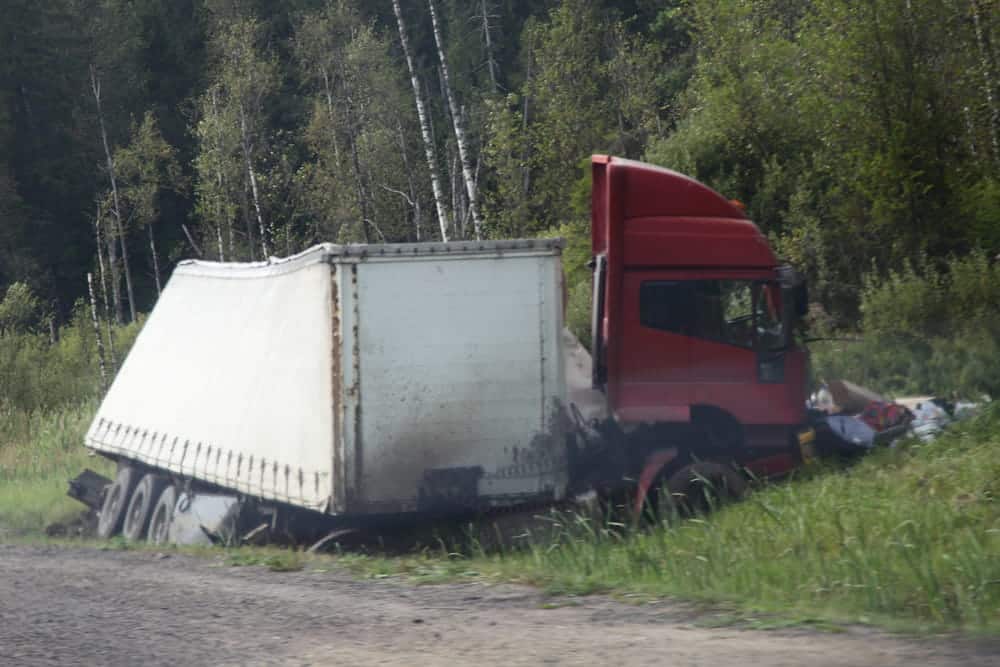
Traffic slows as a tractor-trailer swings sideways ahead, causing a jackknife truck accident and forcing nearby drivers to search for space. After impact, pain, damaged vehicles, and debris can make the next few minutes difficult to process. Start with immediate safety and medical needs, then preserve available evidence and document what happened. In the following days, keep records of your losses and approach insurer requests carefully.
A jackknife occurs when the tractor and trailer move out of alignment, potentially sending the trailer across neighboring lanes. However, the truck’s final position alone does not establish the cause of the crash or legal responsibility. Photos, witness information, and official crash information can help document how the collision occurred.
South Carolina law requires a driver involved in a collision causing injury or death to give immediate notice using the quickest available means. South Carolina Code § 56-5-1260 identifies which law enforcement agency should receive that notice. Johnson, Johnson, Whittle, Lancer & Staggs’ Aiken truck accident lawyer can help identify trucking evidence and address insurer requests while the crash is investigated.
Key Takeaways
- After a jackknife crash, prioritize medical care and preserve scene evidence when conditions safely allow documentation.
- Photographs, witnesses, truck records, and vehicle data can help explain how the jackknife collision developed.
- Medical, income, repair, towing, and other expense records can document injuries and financial losses after impact.
- Some trucking records have limited retention periods, making early identification and preservation important.

What Should You Do First After an Aiken Jackknife Crash?
Prioritize immediate safety and necessary medical care, then preserve available information when conditions allow.
When Should You Seek Medical Care After the Crash?
Request emergency medical assistance when needed, rather than staying at an unsafe scene to collect evidence. Medical evaluation addresses immediate health needs and creates records of reported symptoms, findings, diagnoses, restrictions, and treatment. If symptoms appear or worsen later, seek appropriate care without assuming their timing proves the cause.
What Should You Preserve Before the Scene Changes?
When safe, photograph vehicle positions, damage, debris, road markings, traffic controls, surface conditions, and relevant cargo. Gather driver, motor-carrier, insurance, and witness information before cleanup or vehicle removal changes the scene. If injuries prevent documentation, prioritize treatment and never enter traffic, disturb evidence, climb onto vehicles, or obstruct emergency responders.
What Truck Evidence Should You Identify After the Crash?
Commercial-truck records may show driver activity, vehicle operation, or maintenance issues that scene photographs cannot capture.
Which Truck Records Could Help Show What Happened?
Depending on the vehicle and circumstances, several commercial-truck records may provide information about events before impact. Relevant records may include:
- Electronic logging information showing recorded driver duty activity.
- Available vehicle or event data containing information recorded by systems installed on the truck.
- Maintenance and inspection records documenting reported problems, inspections, repairs, or vehicle condition.
- Dispatch records showing instructions, trip information, or communications related to the driver’s work.
- Onboard-camera footage when the truck was equipped with a system that recorded relevant events.
Not every truck will generate each record type, and carriers or other businesses may control the available records. Identifying those record holders early can help determine where preservation efforts should be directed.
Which Crash Details Could Help Explain the Jackknife?
Evidence may show whether braking, steering, tire condition, cargo movement, mechanical problems, or roadway conditions contributed to the jackknife. A driver traveling beside a tractor-trailer may see the trailer begin swinging across the lane during sudden braking. Scene photographs may capture only the truck’s final position, while witnesses and truck records can help reconstruct what happened moments earlier.

How Should You Document Injuries and Losses Afterward?
Medical records document treatment and findings, while income and expense records help establish resulting financial losses.
Which Medical Records Should You Keep After the Crash?
Keep emergency and follow-up records, prescriptions, rehabilitation documents, medical bills, receipts, and, when appropriate, photographs of visible injuries. Treatment records document reported symptoms, medical findings, and recommended care, while bills and receipts document treatment costs. Report symptoms accurately and follow medical instructions because injury photographs cannot replace evaluation or treatment documentation.
How Can You Document Lost Income and Property Damage?
Keep pay records, employer confirmations, work restrictions, and business income records showing missed work or reduced earnings. Preserve vehicle photographs, repair estimates, towing bills, storage charges, rental expenses, and related receipts for property losses. These records help establish the amount of a loss, but they do not determine who must legally pay it.
What Should You Do in the Days After the Jackknife Crash?
After leaving the scene, obtain available crash information and review insurer requests carefully before providing broader information.
How Can the Crash Location Help You Find Key Records?
For a crash within a municipality, statutory notice goes to the local police department; otherwise, notice goes to the county sheriff or nearest Highway Patrol office. This distinction matters in Aiken County because the exact crash location determines whether the initial notice goes to municipal police, the county sheriff, or the nearest Highway Patrol office. After processing, you may request a collision report through the SCDMV website or Form FR-50, but the report alone does not determine legal responsibility.
What Should You Consider Before Answering an Insurer?
Your policy may require notice or cooperation, while another party’s insurer may seek information without the same policy relationship. Describe what you personally observed, and avoid guessing about braking, speed, mechanical problems, driver actions, or future symptoms. Before providing or signing anything, understand what a recorded statement, medical authorization, release, or settlement document covers.

What Steps Can Protect Your Claim as More Time Passes?
Identify evidence controlled by trucking businesses early and track the applicable filing deadline separately.
When Might Truck Evidence Require Additional Action?
Relevant evidence may remain with the motor carrier, vehicle owner, maintenance provider, cargo loader, or another involved business. Possessing evidence does not establish that party’s responsibility, but an attorney may identify record holders and seek preservation of relevant material. An attorney can help identify record holders and evaluate insurer requests when injuries are significant, or fault is disputed.
How Long Do You Have to Bring an Injury Claim?
South Carolina generally provides a three-year limitations period for actions involving injury to another person or their rights. South Carolina law establishes that general period, although the applicable deadline depends on the claim and circumstances. Insurance discussions do not necessarily extend a filing deadline, and relevant evidence may have shorter retention periods.
Call an Aiken Truck Accident Lawyer
Evidence preserved in the hours and days after an Aiken truck collision can help clarify its cause and consequences. Medical documentation, scene photographs, witness information, commercial vehicle records, and financial records can document different parts of what happened and the resulting losses.
Johnson, Johnson, Whittle, Lancer & Staggs has served Aiken County since 1980 and handles personal injury matters involving truck collisions. If you were injured in a commercial vehicle crash, the firm can review available evidence, documented losses, and insurance issues affecting your claim. Contact us today or call our office at (803) 615-1248 to discuss your situation and possible next steps.


