Rain blurs your windshield as a tractor-trailer approaches quickly on a wet Aiken highway, leaving little room to maneuver. Poor weather can contribute to truck accidents in Aiken, but it does not automatically excuse a driver’s failure to take reasonable precautions. Truck drivers must adjust their speed when reduced visibility, slippery pavement, or other hazards make continued travel increasingly dangerous.
South Carolina requires drivers to maintain reasonable speeds and slow down when weather or roadway hazards demand greater caution. South Carolina Code § 56-5-1520(A) and (F) establish these duties, even when safe driving requires traveling below the posted speed limit. A driver or another responsible party may face liability when negligent conduct contributes to the collision and resulting injuries.
Investigating a weather-related truck accident requires examining driving speed, braking decisions, vehicle maintenance, and conditions at the scene. Crash photographs, electronic vehicle data, inspection records, and witness accounts can help determine whether reasonable precautions could have prevented the collision. Johnson, Johnson, Whittle, Lancer & Staggs’ Aiken truck accident lawyer can review this evidence and assess which parties may be responsible for the injuries.
Key Takeaways
- Rain, fog, and slippery roads increase truck crash risks but do not automatically excuse negligent driving.
- Federal regulations require commercial truck drivers to reduce speed and stop operating when conditions become dangerously unsafe.
- Truck drivers and trucking companies may face liability when unsafe driving or defective equipment contributes to collisions.
- Weather reports, truck data, maintenance records, and scene photographs can help establish negligence and support compensation claims.
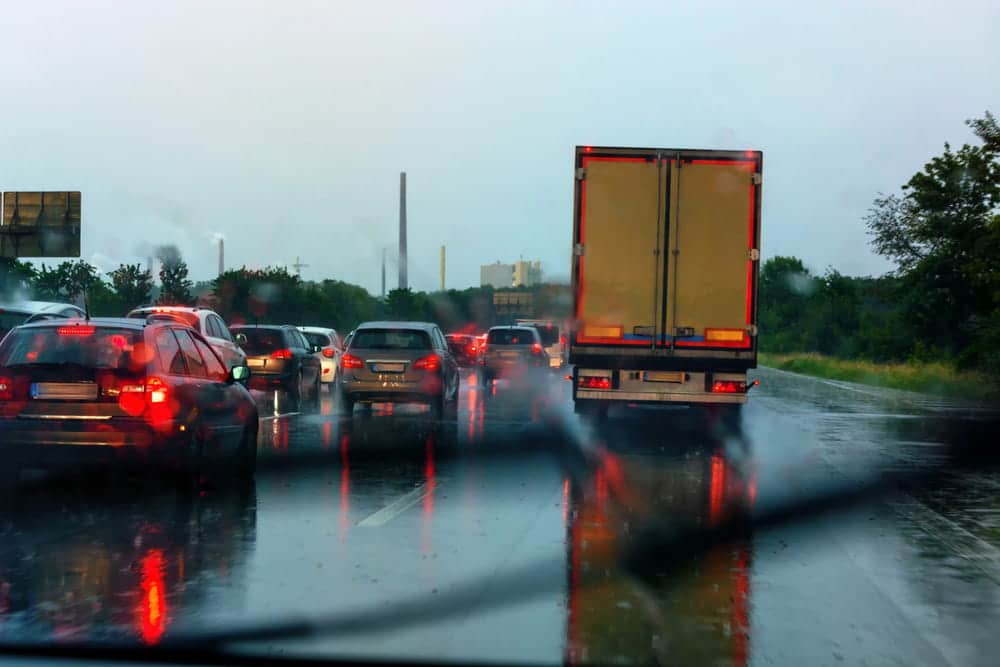

How Does Bad Weather Increase Truck Crash Risks in Aiken?
Wet pavement reduces tire traction, while poor visibility limits the time available for truck drivers to recognize hazards and respond safely.
How Can Rain and Wet Roads Cause Truck Loss of Control?
Rain and standing water can reduce tire traction, increase stopping distances, and cause commercial trucks to skid or hydroplane. Wet pavement also increases the risk of rear-end collisions or jackknifing when truck drivers maintain insufficient following distances. However, hydroplaning does not automatically establish negligence or make a collision unavoidable because driving speed, tire condition, and roadway hazards matter.
Why Do Fog and Heavy Rain Increase Truck Crash Risks?
Thick fog and heavy rain can obscure stopped vehicles, slow traffic, and hide roadway hazards until drivers approach dangerously close. Because heavy trucks require substantial stopping distances, reduced visibility can leave drivers without sufficient time to avoid an approaching hazard. Drivers must respond to deteriorating visibility by reducing speed and increasing following distance rather than continuing at an unsafe pace.
What Must Truck Drivers Do During Dangerous Weather?
Commercial truck drivers must adjust their speed to hazardous conditions and discontinue operations when continued travel becomes too dangerous.
When Must Truck Drivers Slow Down or Stop for Weather?
Covered commercial truck drivers must exercise extreme caution and reduce speed whenever hazardous weather adversely affects visibility or tire traction. 49 C.F.R. § 392.14 requires drivers to discontinue operations when conditions become sufficiently dangerous and resume only when the vehicle can operate safely. If compliance would increase danger to passengers, the regulation permits travel to the nearest location where their safety is assured.
How Can Worn Tires and Brakes Worsen Wet-Road Crashes?
Worn tire tread and defective brakes can reduce traction or stopping ability, making commercial trucks harder to control on wet roads. Inspection reports, maintenance histories, and photographs of damaged components may reveal whether unsafe equipment existed before the collision occurred. However, investigators must establish whether the equipment problem contributed to the accident rather than simply identifying a defect afterward.
Who Is Liable for Weather-Related Truck Crashes in Aiken?
Determining responsibility requires examining the driver’s conduct, the trucking company’s decisions, and evidence connecting those actions to the collision.
When Are Truck Drivers and Trucking Companies Liable?
A truck driver may be negligent by following too closely, traveling too fast, or ignoring reduced visibility during hazardous weather. A trucking company may face responsibility for employee negligence within the scope of employment or its own unsafe maintenance decisions. Dispatch messages and delivery instructions may reveal pressure to continue driving, but liability requires evidence connecting company conduct to the collision.
Can Truck Drivers Use Bad Weather to Avoid Liability?
During heavy rain, a truck strikes slowing traffic, and its driver claims slippery pavement made the collision impossible to prevent. Investigators examine vehicle speed, braking activity, and following distance to determine whether reasonable driving precautions could have avoided the crash. If the injured motorist also drove negligently, South Carolina generally reduces damages for shared fault and bars recovery when that fault exceeds 50%.

What Evidence Helps Prove Fault After Aiken Truck Crashes?
Evidence must establish the conditions at the collision site and show whether the truck driver responded appropriately to identifiable hazards.
Which Weather and Truck Records Help Establish Fault?
Investigators should preserve records showing the weather, vehicle condition, and driving decisions before evidence disappears or becomes harder to obtain. Different records answer different questions about whether the truck driver or trucking company could have prevented the collision. The most useful evidence depends on the disputed circumstances, but several categories commonly help reconstruct weather-related commercial truck accidents.
- Weather observations: Establish rainfall, visibility, and nearby conditions around the collision time.
- Electronic truck data: May document vehicle speed, braking activity, and other recorded operating information.
- Inspection and maintenance records: Help establish whether tire wear, brake defects, or unresolved equipment problems existed.
- Driver logs and dispatch messages: May reveal scheduling decisions, operating hours, and instructions received before the collision.
- Scene photographs and witness statements: Help document standing water, traffic behavior, vehicle positions, and visibility.
How Do Conditions on U.S. 1 Affect Aiken Truck Claims?
After a weather-related truck crash on U.S. 1 in Aiken County, investigators should document the exact collision location. Roadway curvature, drainage, sight distance, and standing water may explain how much time a driver had to recognize danger. Photographs and measurements from the collision site can help determine whether reduced speed or other precautions could have prevented impact.

What Steps Protect Your Claim After a Weather Crash?
After a truck collision, injured people should seek medical care and preserve available evidence before changing weather obscures roadway conditions.
Which Evidence Should You Save Before Weather Changes?
Seek medical attention and ensure required reporting occurs, then photograph vehicle damage, standing water, and roadway conditions when safe. If injuries prevent you from taking photographs, witness contact information and police documentation may help preserve details that disappear afterward. Keep treatment records, medical bills, and missed-work documentation, while recognizing that trucking company records may require prompt preservation requests.
How Can You Seek Damages After a Weather Truck Crash?
Depending on the evidence, recoverable damages may include medical expenses, lost earnings, future treatment costs, and pain and suffering. Early settlement offers may overlook ongoing treatment needs or future losses when injuries have not yet been fully evaluated. Review recorded-statement requests and settlement releases carefully because disputed statements can affect liability, while signed releases may prevent further recovery.
Call an Aiken Truck Accident Lawyer
Determining liability after a weather-related truck accident requires connecting specific driving decisions, vehicle conditions, and company conduct to the injuries. A timely investigation can preserve electronic records, maintenance documents, and other evidence needed to evaluate disputed fault or damages.
Johnson, Johnson, Whittle, Lancer & Staggs handles personal injury claims involving commercial truck accidents in Aiken. Our attorneys can review truck records, roadway conditions, and possible driving or equipment failures when evaluating your injury claim. Contact us today or call our office at (803) 615-1248 to discuss the accident, available evidence, and possible legal options.


